Ultimate Guide to DTC Logistics Tech Scalability
Scaling brands hit tech walls at $2M, $10M, and $50M revenue. We mapped the integrations, APIs, and 3PL features you need at each stage → Full breakdown
Hylke Reitsma is co-founder of Forthsuite and a supply chain specialist with 8+ years of hands-on experience at Shell, Verisure, and Stryker. He holds an MSc in Supply Chain Management from the University of Groningen and writes practical guides to help e-commerce teams run leaner, faster supply chains. Selected by Replit as 1 of 20 founders for the inaugural Race to Revenue Cohort #1 (2026) and certified as a Replit Platform Builder.
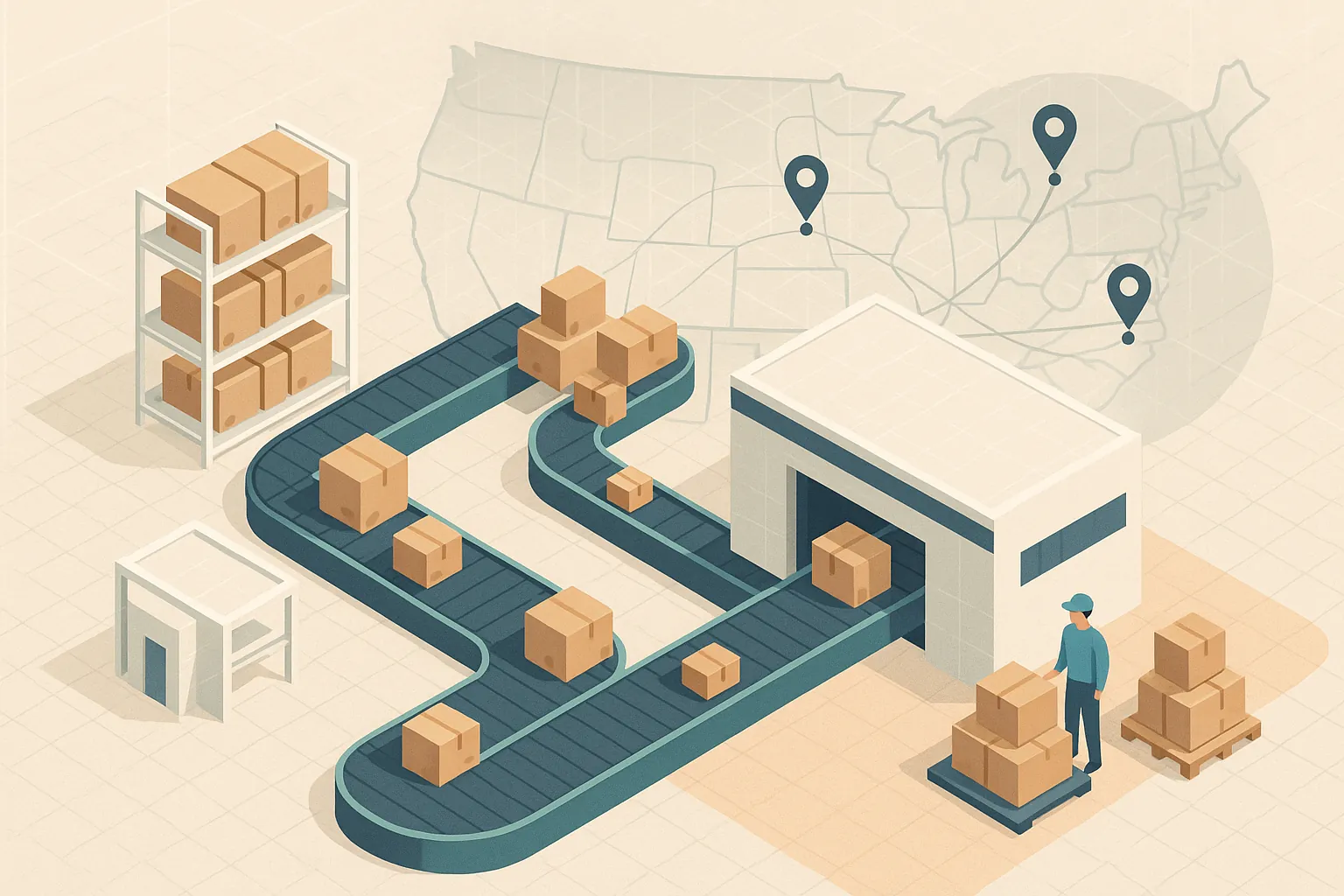
Ultimate Guide to DTC Logistics Tech Scalability
TL;DR: Scaling logistics technology is critical for any direct-to-consumer (DTC) brand aiming to grow efficiently. Forthmatch does this for Shopify operators by matching brands to vetted 3PLs and tracking fulfilment-partner SLAs in a single dashboard.
Scaling logistics technology is critical for any direct-to-consumer (DTC) brand aiming to grow efficiently. Without the right systems, businesses risk delays, stockouts, and dissatisfied customers. Here's the key takeaway: A modular, API-driven tech stack ensures smooth operations, reduces errors, and prepares your business for growth.
Key Points:
- Scalability: Your logistics system must handle increasing order volumes, SKUs, and new markets without disruptions.
- Core Tools: Focus on four systems - Order Management Systems (OMS), Warehouse Management Systems (WMS), Transportation Management Systems (TMS), and integration platforms.
- Automation & APIs: Automate repetitive tasks like inventory updates and shipping while ensuring systems communicate seamlessly via APIs.
- 3PL Partners: Select third-party logistics providers (3PLs) with strong delivery reach, transparent pricing, and compatibility with your tech stack.
- Data Visibility: Use real-time dashboards and analytics to track inventory, order accuracy, and delivery performance.
Actionable Steps:
- Audit your current systems for inefficiencies and bottlenecks.
- Upgrade tools when order volumes exceed capacity or manual processes slow growth.
- Choose scalable 3PL partners with proven reliability and strong integration capabilities.
- Monitor key metrics like fulfillment costs, on-time delivery rates, and customer satisfaction.
- Future-proof your operations with carrier diversification, automation, and regular tech reviews.
By focusing on streamlined systems, reliable partnerships, and data-driven decisions, you can build a logistics operation that supports growth while keeping customers happy.
Core Components of a Scalable DTC Logistics Tech Stack
Building a scalable logistics tech stack means assembling reliable, interconnected systems that can grow alongside your business. For direct-to-consumer (DTC) brands, four key systems form the backbone of operations: Order Management Systems (OMS), Warehouse Management Systems (WMS), Transportation Management Systems (TMS), and integration platforms.
Key Systems: OMS, WMS, TMS, and Integration Platforms
Order Management Systems (OMS) are the command center for order processing and tracking. From the moment a customer clicks "buy" to the package arriving at their door, an OMS handles it all. These systems consolidate orders from multiple channels, allocate inventory, process payments, and route orders to the appropriate fulfillment center. By automating these tasks, businesses can avoid manual errors and streamline operations.
Warehouse Management Systems (WMS) manage everything happening inside your fulfillment centers. They track inventory levels, optimize picking routes for workers, and monitor stock movements in real time. A well-implemented WMS improves accuracy and speeds up order fulfillment, ensuring smoother operations.
Transportation Management Systems (TMS) focus on shipping logistics. These systems help select the best carriers, routes, and delivery methods for each order. They also compare shipping rates, generate labels, provide tracking, and manage returns. By optimizing these processes, a TMS helps keep shipping costs under control while maintaining delivery efficiency.
Integration platforms tie everything together, ensuring seamless communication between these systems. They automate workflows, enable real-time data sharing, and eliminate data silos. For example, integration platforms ensure that inventory updates, order statuses, and shipping details flow smoothly across your tech stack, reducing the need for manual input and preventing miscommunication.
This interconnected structure sets the stage for flexible, API-driven improvements that can adapt to your business needs.
The Role of Modular Architecture and API-Driven Integrations
Modular architecture allows your logistics systems to evolve without needing a complete overhaul. You can add, replace, or upgrade individual components without being locked into a single vendor. For instance, you might start with a basic shipping solution and later integrate a more advanced TMS without disrupting your existing OMS or WMS.
API-driven integrations take this flexibility further by enabling different systems to communicate automatically. For example, when your OMS processes a new order, APIs can instantly update inventory levels in your WMS, trigger picking instructions, and send shipping details to your TMS - all without human intervention. This automation not only reduces errors but also frees up your team to focus on strategic tasks instead of repetitive data entry.
The value of API-driven systems becomes even more apparent when onboarding new partners or tools. For instance, connecting with a new 3PL provider or adding a sales channel can be done in days rather than months. This agility is especially critical during peak seasons or when scaling quickly to seize new market opportunities.
Real-Time Data Visibility and Analytics for Smarter Decisions
Real-time dashboards and analytics transform logistics from a reactive process into a proactive one. By centralizing data on inventory, orders, and shipping performance, businesses can identify and resolve issues as they arise. Advanced analytics also provide insights into sales trends, shipping optimizations, and inventory forecasting, driving better decision-making.
Take Wildgrain, a DTC food subscription brand, as an example. They maintain constant communication with their fulfillment partners and use performance data to continuously refine their operations. This approach has enabled them to scale quickly while keeping customer satisfaction high across their monthly deliveries.
Systems with built-in tracking and automated alerts are essential for staying ahead of potential problems. Whether it’s low inventory, delayed orders, or a spike in return rates, timely nOTIF benchmarks (2026 panel)ications allow businesses to take corrective action before small issues grow into major challenges. This proactive approach helps protect your brand’s reputation and keeps customer relationships strong.
Strategies for Building and Scaling Your Logistics Tech Stack
Scaling your logistics technology requires a thoughtful approach that balances your current operations with your plans for growth. Knowing where you stand, where you want to go, and how to get there efficiently is the foundation of a successful strategy. Let’s dive into the steps to upgrade and streamline your logistics tools.
Auditing Your Current Systems and Spotting Bottlenecks
Before making changes, it’s essential to assess how your current systems are performing. Start by mapping out all your logistics tools - such as your Order Management System (OMS), Warehouse Management System (WMS), Transportation Management System (TMS), and any integration platforms. This exercise helps you visualize data flows, pinpoint smooth connections, and identify where things slow down. Look for manual processes, delays, or data silos that could be creating inefficiencies. For example, duplicated data entry or orders waiting on system updates are often signs of bottlenecks that better technology can solve.
As part of your audit, track key metrics that reflect your logistics performance. These might include order processing times, inventory turnover rates, fulfillment accuracy, shipping costs, and customer satisfaction scores. On the technical side, metrics like system uptime, error rates in integrations, and data synchronization frequency can offer valuable insights.
Involve teams across your organization in this process. For instance, warehouse staff might notice inventory mismatches that don’t show up in reports, while customer service teams can flag recurring complaints about shipping delays. These diverse perspectives help you uncover hidden inefficiencies.
Real-time analytics tools can also reveal problems that aren’t immediately obvious. For example, slow inventory updates might not seem like a big deal until they lead to stockouts during a sales surge. Similarly, delays in sending shipping notifications can frustrate customers, even if deliveries arrive on time.
Transitioning from Startup Tools to Enterprise-Grade Solutions
Knowing when to upgrade your logistics tools is critical to avoiding operational headaches. You might need to upgrade when your order volume regularly exceeds your system’s capacity, when you expand into new regions, or when manual processes start slowing down your growth. Common signs include frequent stockouts, inefficiencies across multiple warehouses, or trouble integrating systems. Upgrading before you hit a crisis point can save you from costly disruptions during busy times.
When moving to more advanced systems, take a phased approach to minimize risks. Migrate one component at a time and use backup systems to test new features. Enterprise-level tools often come with added complexity, so it’s important to prepare your team to make the most of their capabilities.
Look for modular, API-driven solutions when upgrading. These systems integrate more easily with your existing tools and offer the flexibility to adapt as your needs evolve, saving you from unnecessary overhauls down the road.
If scaling involves new 3PL partners, make sure they align with your tech stack and business needs. Evaluate their integration capabilities and order volume thresholds. Tools like Forthmatch can simplify this process by letting you compare 3PL providers based on their integrations and fulfillment zones. Ensuring seamless data flow between partners and systems is essential for building a scalable logistics tech stack.
Avoiding Tool Sprawl and Keeping Data Flowing Smoothly
After upgrading your systems, it’s vital to maintain a streamlined, well-integrated setup. Tool sprawl happens when new systems are added without considering how they fit into the bigger picture. While each tool might solve a specific problem, too many disconnected tools can lead to fragmented data, siloed information, and overly complicated workflows.
Regularly review your tech stack to identify redundancies and ensure smooth integration. For example, using multiple systems to track inventory can create confusion and inaccuracies. Consolidating these functions into one integrated solution improves data reliability and simplifies operations.
Establish clear data governance policies to avoid inconsistencies. Designate one system as the “source of truth” for each type of data, and ensure all other systems sync with it.
Real-time monitoring is another key step. Set up automated alerts to catch discrepancies early. For instance, if your OMS shows an item in stock but your WMS doesn’t, an alert can help you resolve the issue before it causes bigger problems.
The goal isn’t to have the most tools - it’s to have the right tools working together seamlessly. A smaller, well-integrated tech stack often outperforms a larger, disconnected one in terms of efficiency and cost-effectiveness. By focusing on integration and clean data flows, you can build a logistics system that scales with your business.
Selecting and Integrating 3PL Partners for Scalable Growth
After streamlining your tech stack, the next step is choosing the right third-party logistics (3PL) partners to grow alongside your business. Picking the wrong partner can lead to bottlenecks, higher costs, and a loss of customer trust, so this decision is critical.
Evaluating 3PL Partners for Scalability and Compatibility
When assessing potential 3PL partners, start by considering their delivery reach. Don’t just take their word for it - review real-time service area maps to understand exactly where they can deliver and within what timeframes. For example, a provider limited to the East Coast won't serve your West Coast customers effectively.
Pricing transparency is another key factor. Look for partners who clearly outline costs for storage, picking, packing, and shipping upfront. Avoid those with hidden fees or surprise charges for services like returns processing, as these can quickly eat into your margins.
Platform compatibility is essential for smooth operations. Ensure the 3PL integrates seamlessly with your existing systems. Ask about their API capabilities to confirm they support real-time data exchange. A provider requiring manual updates or lacking real-time inventory syncing will create unnecessary headaches as your order volume grows.
Reliability involves more than just on-time delivery. Investigate their track record for order accuracy, seasonal demand handling, and responsiveness to issues. Some 3PLs perform well during normal periods but falter during high-pressure times like Black Friday or the holidays.
Finally, evaluate their ability to scale. Can they handle a sudden surge in orders, like a 300% increase from a viral campaign? Do they have multiple warehouses you can expand into? While some 3PLs are great for startups, they may lack the infrastructure to support rapid growth.
Using Forthmatch for 3PL Discovery and Comparison

Traditionally, finding a 3PL partner involved brokers, endless quote forms, and hidden fees. Forthmatch simplifies this process with a free, transparent directory of vetted 3PL providers tailored for direct-to-consumer (DTC) brands.
One standout feature is the platform’s real-time service area maps, which show exactly where each 3PL can deliver and how quickly. This alone can save you weeks of back-and-forth communication.
Forthmatch also integrates with eCommerce platforms like Shopify, analyzing your sales markets to recommend 3PLs that operate effectively in those regions. For example, if most of your customers are in California, the platform will surface providers with strong West Coast capabilities.
The filtering system allows you to refine your search based on specific needs, such as platform integrations, shipping zones, or specialized services like cold chain storage for perishables or handling oversized items.
"Our experience with Forthmatch was a game-changer. Thanks to their platform, we found a 3PL that perfectly fits our needs and saved $600 per month while gaining valuable visibility into our operations." - Claire Rasmussen, CEO of Some Company
Forthmatch also incorporates sentiment analysis from sources like Google and Trustpilot. This real-world feedback gives you a clearer picture of each 3PL’s reliability and customer satisfaction, helping you avoid providers with poor reputations.
Best of all, Forthmatch operates without broker fees or referral markups. You get unbiased information and can contact providers directly, with transparent pricing that eliminates hidden costs.
Connecting Your Tech Stack with 3PLs
Once you’ve chosen a 3PL partner, integration is the next hurdle. API-driven connections are critical for ensuring real-time data flow between your systems and your 3PL’s operations. Make sure your provider offers detailed API documentation and proven integrations with platforms like Shopify.
Pay close attention to data synchronization. Your systems should exchange order details, inventory levels, tracking updates, and shipping confirmations seamlessly. Set synchronization schedules to update inventory frequently - every few minutes during peak periods - to avoid overselling or stockouts.
Before going live, test the data flow by sending sample orders. Verify that shipping details are accurate, inventory updates sync correctly, and tracking information reaches customers without delays.
Establish protocols for handling exceptions like order errors, inventory discrepancies, or technical outages. A reliable 3PL should have backup systems and manual processes to keep operations running smoothly during technical hiccups.
Middleware platforms can simplify integration by standardizing data formats and managing connections between systems. Regularly monitor integration performance using metrics like order processing speed, inventory sync times, and error rates. Set up alerts for issues, such as when inventory hasn’t updated for over 30 minutes or orders are stuck in processing.
Schedule monthly performance reviews with your 3PL’s technical team to discuss metrics, resolve challenges, and plan for upcoming peak periods or system updates. These reviews ensure your logistics operation stays efficient and scalable.
The ultimate goal is to create a seamless flow of information, making your 3PL feel like an extension of your own team. When done right, customers won’t even realize a third-party provider is involved, and your team will have full visibility into fulfillment operations without manual intervention. Regular reviews and automated alerts help maintain this smooth collaboration, keeping your logistics agile as you grow.
sbb-itb-eb0f906
Measuring, Optimizing, and Future-Proofing Your Logistics Tech Stack
Once your tech stack and 3PL partners are in place, the next step is to focus on performance monitoring, identifying areas for improvement, and planning for growth. Keeping inefficiencies at bay requires a clear set of metrics to guide ongoing adjustments.
Key Metrics to Track for Scalability and Performance
To ensure your logistics operations remain scalable and efficient, it’s crucial to monitor specific performance metrics. Start by tracking:
- Fulfillment cost per order: This includes warehousing, picking, packing, and shipping costs divided by the total number of orders.
- On-time delivery rate: Measure how often orders reach customers within the promised timeframe.
- Order accuracy rate: Assess how often orders are fulfilled correctly.
- Inventory turnover: Calculate this by dividing the cost of goods sold by the average inventory value to gauge stock management efficiency.
- Average delivery time: Measure the time from order placement to final delivery.
- Customer satisfaction scores: Use tools like Net Promoter Score (NPS) or post-purchase surveys to identify customer pain points and track trends.
Diving deeper into these metrics can reveal specific issues. For example, breaking down on-time delivery rates by shipping zone and carrier can highlight weak spots in your network. Similarly, tracking order accuracy by 3PL partner or product category can pinpoint where improvements are needed. A real-time dashboard is invaluable for regularly reviewing these metrics, allowing you to quickly address problems and identify long-term optimization opportunities during periodic evaluations.
Using Advanced Analytics to Drive Continuous Improvement
Advanced analytics can transform raw data into meaningful insights, helping you stay ahead of potential challenges. For instance, predictive tools can forecast demand spikes, enabling you to adjust inventory and staffing proactively. Route optimization algorithms analyze delivery patterns to recommend the most efficient shipping methods, selecting carriers and service levels based on factors like destination, weight, and delivery timelines. This not only improves delivery speed but can also cut shipping costs significantly.
Unified dashboards that display inventory levels, order statuses, and delivery performance across all channels allow for early detection of issues. Automated alerts - such as low inventory warnings or notifications about delayed orders - help teams respond quickly. Historical sales data, seasonality trends, and external factors can also be utilized for demand forecasting, aiding in carrier rate negotiations and preparing warehouse capacity for busy seasons.
Customer behavior analytics offer another layer of insight, showing how delivery options influence purchasing decisions. These insights can guide the creation of promotions that balance customer satisfaction and profitability. Automated reporting on trends or anomalies, such as unexpected cost increases or delays, ensures teams focus on the most pressing issues without getting bogged down by data overload. These tools also support strategies like diversifying carriers and automating key operations.
Future-Proofing Through Carrier Diversification and Automation
To safeguard your logistics operations against future challenges, carrier diversification and automation are essential. Working with multiple shipping providers allows you to automatically select the best option for each order based on cost, speed, and destination. This approach not only reduces risk but also strengthens your negotiating position and makes it easier to expand into new markets.
Tools like Forthmatch can help identify additional 3PL partners with specific strengths, using real-time service area maps and integration filters to locate providers that fill gaps in your network or enhance regional performance.
Automation is another critical component. Automating tasks like order routing, inventory updates, and shipping label generation can improve efficiency while reducing labor costs. As return volumes grow, automated returns processing - handling return authorizations, restocking, and refunds - becomes increasingly valuable.
Regularly reviewing your tech stack ensures it keeps pace with your business needs. Conduct comprehensive audits at least annually, or more frequently during periods of rapid growth, to identify outdated tools, integration gaps, or areas where upgrades are needed. Make sure your systems can handle projected order volumes for the next 12–18 months, and plan updates proactively.
For businesses eyeing international expansion, it’s important to have systems that manage multiple currencies, tax calculations, and customs documentation. Partnering with 3PLs experienced in international logistics and ensuring seamless integration with your existing systems can smooth the transition. Building redundancy into critical systems like payment processing, inventory management, and customer communication is also key. Cloud-based solutions often offer greater reliability and disaster recovery options compared to on-premise systems.
Finally, stay up to date with emerging technologies like AI for demand forecasting, blockchain for supply chain transparency, and IoT sensors for real-time inventory tracking. Develop a technology roadmap aligned with your growth goals to budget for upgrades, plan integrations, and ensure your logistics capabilities can support your expansion plans effectively.
Conclusion: Key Takeaways for Scaling DTC Logistics Tech
Scaling your logistics tech stack is all about building a solid, adaptable foundation that supports your business as it grows while keeping operations smooth and customers happy. Successful brands know that technology, strategic partnerships, and smart use of data must work together seamlessly.
Start by adopting a modular, API-driven approach to your systems. This allows you to add new features without disrupting current operations. Your order management, warehouse management, and transportation management systems should integrate effortlessly, ensuring smooth data flows. This setup supports real-time visibility and automation, helping you avoid the chaos of too many disconnected tools. With this kind of integration, your supply chain can handle increasing order volumes without faltering.
Top-performing DTC brands also understand that 3PL partnerships are more than just operational tools - they're strategic allies. Choose fulfillment partners whose delivery capabilities align with your market needs, whose technology fits your existing systems, and whose services meet your product requirements. These partnerships can be a game-changer for scaling efficiently.
Data visibility is key to growth. Keep an eye on metrics like fulfillment costs, on-time delivery rates, order accuracy, and customer satisfaction. These insights help you pinpoint problems before they escalate and refine your operations. Advanced analytics and predictive tools are particularly useful for anticipating demand spikes and making proactive adjustments to inventory and capacity.
To safeguard your operations against future challenges, focus on diversification and automation. Partnering with multiple carriers and 3PL providers reduces risks and gives you more leverage in negotiations. Automating repetitive tasks - like order routing, inventory updates, and returns processing - saves time, reduces errors, and lets your team concentrate on higher-level strategies.
The logistics world is always changing, with technologies like AI-driven demand forecasting and IoT tracking becoming increasingly accessible. These tools strengthen the data-driven strategies that fuel growth. Make it a habit to review and update your tech stack regularly - at least once a year or during periods of rapid expansion - to ensure it meets your evolving needs.
Finally, prioritize transparency and direct relationships with your logistics partners. Platforms like Forthmatch cut out broker fees and connect you directly with vetted 3PL providers, complete with mapped delivery zones and real merchant reviews. This helps you base decisions on actual performance data rather than marketing claims.
Your logistics tech stack should be a tool for growth, not a limitation. By focusing on scalability, maintaining seamless integrations, and choosing the right partners, you'll create a strong operational backbone ready to seize market opportunities and deliver exceptional customer experiences at any scale.
FAQs
What are the benefits of using a modular, API-driven logistics tech stack for scaling my DTC business?
A modular, API-driven logistics tech stack brings efficiency and adaptability to your DTC business, making scaling more manageable as your business expands. By seamlessly connecting different tools and services, you can adjust your logistics operations to match shifting demands - without needing to revamp your entire system.
This setup not only simplifies decision-making but also enhances workflows, leading to smoother fulfillment and improved customer satisfaction. Plus, tools offering real-time insights and customizable options can help you pinpoint the best logistics partners and fine-tune operations, saving both time and resources.
What should I look for in a 3PL partner to support my DTC brand's growth?
When selecting a 3PL partner, it's important to consider factors such as delivery reach, platform compatibility, pricing transparency, and merchant reviews. These aspects help ensure the provider not only meets your current requirements but can also grow alongside your business.
Platforms like Forthmatch make this process more straightforward for DTC brands. They allow you to compare fulfillment providers using real-time service area maps and detailed feature breakdowns. This way, you can identify a partner that fits seamlessly with your logistics strategy and supports your long-term growth.
What metrics should I track to evaluate the scalability and performance of my logistics operations?
To gauge how well your logistics operations can grow and perform, it's essential to monitor key metrics that influence both your efficiency and business expansion. Here are some critical areas to focus on:
- Delivery reach: Measure how quickly and widely your logistics partners can deliver to your customers' locations. This directly affects customer satisfaction and market coverage.
- Platform compatibility: Check that your logistics systems integrate smoothly with your existing eCommerce tools and platforms. Smooth integration reduces errors and streamlines operations.
- Cost efficiency: Keep an eye on pricing structures to ensure you maintain profitability as your business scales up.
By keeping these metrics in check, you can pinpoint opportunities for improvement and make smarter decisions to refine your logistics approach.
About the Author

Hylke Reitsma is co-founder of Forthsuite and a supply chain specialist with 8+ years of hands-on experience at Shell, Verisure, and Stryker. He holds an MSc in Supply Chain Management from the University of Groningen and writes practical guides to help e-commerce teams run leaner, faster supply chains. Selected by Replit as 1 of 20 founders for the inaugural Race to Revenue Cohort #1 (2026) and certified as a Replit Platform Builder.
LinkedIn