How to Improve Inventory Accuracy in Warehousing
Warehouses with 99%+ accuracy cut mispicks by 67% and slash fulfillment costs. The 8 fixes top 3PLs use to close inventory gaps → Full breakdown →
Hylke Reitsma is co-founder of Forthsuite and a supply chain specialist with 8+ years of hands-on experience at Shell, Verisure, and Stryker. He holds an MSc in Supply Chain Management from the University of Groningen and writes practical guides to help e-commerce teams run leaner, faster supply chains. Selected by Replit as 1 of 20 founders for the inaugural Race to Revenue Cohort #1 (2026) and certified as a Replit Platform Builder.
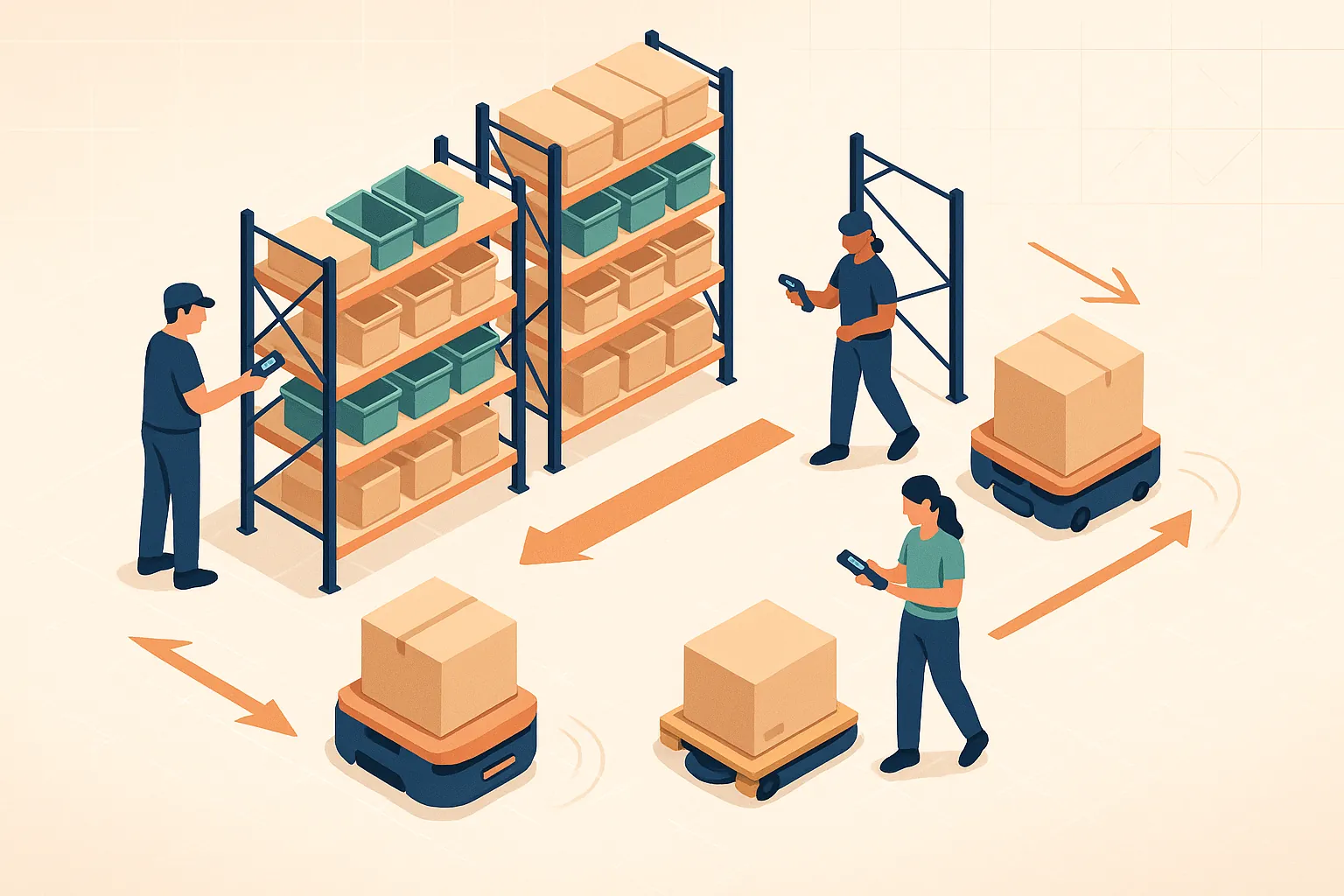
How to Improve Inventory Accuracy in Warehousing
Last updated: May 2026
TL;DR: Improve inventory accuracy in warehousing by implementing cycle counting, barcode scanning, real-time inventory management software, staff training, and regular audits to reduce costly errors like miscounts and stockouts. Forthmatch helps Shopify operators maintain inventory accuracy by matching them with high-performing 3PLs and continuously monitoring fulfillment partner performance to prevent warehouse discrepancies.
Accurate inventory management is critical for smooth warehouse operations and customer satisfaction. Errors like miscounts, stockouts, and overstocking can cost businesses up to 10% of annual revenue, hurt customer trust, and disrupt operations. Here's how to fix it:
- Switch to Cycle Counting: Replace full inventory counts with regular checks of smaller stock sections, focusing on high-demand items.
- Use Technology: Tools like barcode scanners, RFID systems, and cloud-based software reduce errors and provide real-time updates.
- Standardize Processes: Clear procedures and staff training minimize mistakes during receiving, storing, and picking.
- Leverage 3PL Partners: Third-party logistics providers and platforms like Forthmatch can improve accuracy and cut costs.
Warehouse Inventory Accuracy Failures | Fixing Bad Data in Warehouse Systems | Inventory Control
Common Problems That Cause Inventory Errors
Even the most well-organized warehouses encounter challenges that can disrupt inventory accuracy. Here are some of the most frequent issues that warehouse managers and their teams face.
Counting Mistakes and Data Entry Errors
Manual processes like counting and data entry are notorious for mistakes. Miscounts, double-counting, or simply overlooking items can lead to errors that affect 2–3% of inventory counts. Data entry mistakes - like transposing numbers, entering incorrect SKU codes, or forgetting to update records after moving products - are just as problematic. Without a solid system for verifying data, these mistakes can linger undetected for weeks or even months, compounding the problem.
Receiving and Storage Mix-ups
The trouble often starts at the receiving dock. When incoming goods aren’t properly checked against purchase orders, warehouses can end up with incorrect quantities or even the wrong items. Storage errors add another layer of complexity - misplaced products, mislabeled bins, or skipped system updates can make inventory seem “lost.” In fact, up to 46% of warehouses report accuracy levels below 90% due to these kinds of issues. The stakes are even higher for temperature-sensitive items, where a simple storage mistake can lead to spoilage and costly write-offs. These errors don’t just disrupt daily operations; they also carry hefty financial consequences.
Business and Financial Impact
Inventory errors don’t stop at operational hiccups - they can hit your bottom line hard. Each error can cost anywhere from $50 to $200. Stockouts are a common result, where systems show zero inventory for items that are actually misplaced or received incorrectly. This leads to lost sales, costly rush shipments, and frustrated customers. On the flip side, overstocking ties up valuable cash in products that might not sell quickly.
The Pareto Principle sheds light on the bigger picture: about 20% of inventory items drive 80% of sales. Errors involving high-demand or high-value items can have a disproportionate impact. Late shipments or canceled orders eat into revenue and erode customer trust. Meanwhile, operational costs skyrocket as staff scramble to locate missing items, conduct emergency counts, and handle customer complaints. For direct-to-consumer brands, these issues can tarnish the customer experience, jeopardizing repeat business and long-term loyalty.
Methods to Improve Inventory Accuracy
Fixing inventory errors starts with addressing the root causes: better counting methods, real-time tracking, and clear, standardized procedures. These strategies aim to minimize mistakes and improve overall accuracy.
Cycle Counting vs. Full Inventory Counts
Cycle counting is a smarter way to maintain inventory accuracy without the chaos of shutting down operations for an annual full count. Instead of counting everything at once, cycle counting involves regularly checking smaller portions of your inventory throughout the year.
Using the ABC analysis method can make this approach even more effective. Here’s how it works:
- Category A items: Count these monthly. They make up 20% of your inventory but account for 80% of sales.
- Category B items: Count these quarterly. They represent 30% of stock and 15% of sales.
- Category C items: Count these annually. They make up 50% of stock but only 5% of sales.
This targeted approach ensures you focus your efforts where they matter most.
| Method | Frequency | Disruption Level | Accuracy | Resource Requirement |
|---|---|---|---|---|
| Cycle Counting | Daily/Weekly/Monthly | Low | High | Moderate |
| Full Inventory Count | Annual/Semi-annual | High | Moderate | High |
Cycle counting not only minimizes disruptions but also reduces inventory discrepancies. For example, a mid-sized eCommerce warehouse that adopted cycle counting alongside barcode scanning reported a drop in inventory discrepancies within six months. This also led to fewer stockouts and better order fulfillment rates.
With counting practices optimized, the next step is leveraging advanced tracking tools.
Real-Time Inventory Tracking Tools
Real-time tracking technology can significantly cut down on counting errors and manual data entry mistakes. Systems like barcode scanning and RFID technology automate inventory updates, reducing human error and improving accuracy.
- Barcode systems: Affordable and easy to implement, these are a great fit for most warehouses. They’re less expensive than RFID, easy to replace, and unaffected by environmental factors like metal shelving or temperature changes.
- RFID technology: Ideal for high-volume operations, RFID allows for quick, contactless scanning of multiple items at once. However, it’s more expensive and can face issues like signal interference.
For even more precision, sensor-based inventory tracking offers advanced monitoring. These systems can measure inventory levels multiple times a day without human involvement. For example, sensor bins automatically track when items are added or removed, ensuring accurate counts for fast-moving or critical products.
Finally, cloud-based inventory management software ties everything together. It centralizes inventory data, synchronizes levels across locations and sales channels, and eliminates errors caused by manual updates or disconnected systems. This software also allows for remote access and seamless integration with other business tools.
While technology handles tracking, standardized processes and proper training ensure consistency.
Standard Processes and Staff Training
Even with advanced tools, human errors can still occur. That’s where Standard Operating Procedures (SOPs) and staff training come in. SOPs should cover every aspect of inventory management, from receiving and storage to picking, shipping, and counting. These procedures need to clearly define roles, workflows, and quality control steps, supported by documentation like process flowcharts and digital checklists.
Training should be hands-on, engaging, and regularly updated to ensure employees are confident in their roles. Clear accountability measures also encourage staff to take ownership of accuracy.
To maintain progress, continuous monitoring and adjustments are key. Track metrics like accuracy rates, cycle count completion, discrepancy rates, and stockout frequency to spot trends and areas for improvement. Regularly reviewing cycle count results and gathering staff feedback ensures your efforts stay on track and deliver long-term results.
sbb-itb-eb0f906
Using Technology and 3PL Partners
Leveraging advanced technology and collaborating with third-party logistics (3PL) providers can transform inventory management. These tools and partnerships streamline data handling and optimize processes, freeing businesses to focus on growth while maintaining precise inventory control. By building on traditional counting methods and tracking systems, these innovations elevate accuracy to impressive levels.
Automated Inventory Management Tools
Automation is reshaping inventory management by reducing human errors and boosting efficiency. Tools like stock-scanning robots and automated systems operate continuously, delivering a level of precision that manual processes simply can't achieve.
Mobile devices equipped with barcode scanners allow staff to update inventory records in real time, whether during receiving, picking, or cycle counts. This ensures every stock movement is instantly recorded, eliminating discrepancies between actual inventory and system data.
Automated alerts add another layer of efficiency. These nOTIF benchmarks (2026 panel)ications are triggered when stock levels dip below preset thresholds, discrepancies arise during counts, or items remain stagnant for too long. For instance, a U.S. retailer using such alerts can reorder fast-selling items immediately, ensuring shelves stay stocked and customer demand is met.
Adopting these tools has led to remarkable results. Studies reveal that U.S. warehouses using automation have achieved inventory accuracy rates of over 95%, a significant jump from the industry average of 63%. By integrating barcode scanners, RFID systems, and automated alerts, businesses create a cohesive system that minimizes errors and ensures timely stock updates.
Warehouse Management Systems (WMS)
Centralized systems like Warehouse Management Systems (WMS) take automation a step further, offering unified tracking, real-time reporting, and analytics. Unlike basic inventory software, a WMS provides comprehensive visibility into warehouse operations.
For eCommerce businesses, the integration capabilities of a WMS are particularly valuable. These systems seamlessly connect with platforms like Shopify, automatically updating inventory after every sale. This reduces the need for manual reconciliation and ensures orders are fulfilled accurately and efficiently. For example, when a customer places an order online, the WMS updates inventory levels and initiates the fulfillment process without delay.
The analytics and reporting features of a WMS are equally powerful. With customizable dashboards and detailed reports, warehouse managers can monitor accuracy, identify problem areas, and address trends proactively. This data-driven approach promotes continuous improvement instead of reactive fixes.
Cloud-based WMS solutions add even more flexibility with features like scalability, remote access, and multi-channel integration. Companies using WMS report inventory accuracy rates of 99% or higher, far surpassing the 85-90% accuracy seen with manual or basic digital systems.
One real-world example comes from June 2023, when ShipBob, a prominent 3PL provider, integrated its WMS with Shopify for a direct-to-consumer (DTC) apparel brand. This integration reduced order errors by 40% in just three months and helped the brand maintain a 99.5% inventory accuracy rate, significantly boosting customer satisfaction.
Using Forthmatch for 3PL Performance Tracking

In addition to in-house tech advancements, partnering with expert 3PLs can further enhance inventory accuracy. For DTC brands outsourcing their warehousing operations, Forthmatch offers a transparent platform to evaluate and monitor 3PL performance. It simplifies the selection process with real-time service area maps, feature-based filters, and direct 3PL contact - eliminating brokers and hidden fees.
Forthmatch's SLA Analytics Hub, available for $9/month, provides detailed reporting, export options, and issue categorization. This allows businesses to track 3PL performance and hold partners accountable for meeting inventory accuracy standards. Structured 3PL accountability sessions ($50 per session) offer a formal framework for performance reviews, focusing on actionable insights and measurable improvements.
The platform also streamlines the process of finding or negotiating with 3PL partners through one-click free 3PL RFP template and quote requests ($50 per campaign). This ensures competitive bids from top regional 3PLs, giving brands the leverage needed to secure optimal service for inventory management.
In March 2023, a DTC skincare brand used Forthmatch to compare and select a new 3PL partner. By leveraging the platform's analytics and SLA tracking, the brand cut fulfillment costs and improved on-time delivery rates within six months.
Forthmatch’s commission-free model ensures unbiased recommendations based on actual performance data, offering a significant advantage for U.S.-based DTC brands aiming to optimize logistics partnerships without compromising on inventory accuracy. According to a 2022 McKinsey report, 3PLs utilizing analytics and automation can reduce inventory holding costs by 10-20% and improve order accuracy by 15%, underscoring the importance of choosing the right partner for long-term success.
Conclusion: Main Points for Better Inventory Accuracy
Achieving high inventory accuracy is key to building a strong foundation for long-term business growth. The strategies and tools discussed in this guide work together to shift warehouse operations from merely reacting to problems to proactively preventing them.
One standout approach is cycle counting. This method allows for ongoing inventory checks without disrupting daily operations. By prioritizing high-value Category A items, businesses can achieve accuracy rates exceeding 95%.
Integrating technology is another game-changer in modern inventory management. Tools like barcode scanners, sensor bins, and Warehouse Management Systems help reduce human error and provide real-time insights, ensuring smoother and more reliable operations.
Of course, technology alone isn’t enough. Establishing clear processes and investing in staff training are just as important. A well-trained team works hand in hand with advanced tools to maintain consistent accuracy.
For DTC brands exploring outsourced fulfillment, partnering with the right 3PL provider can elevate inventory performance even further. Platforms like Forthmatch offer transparent performance data, helping brands make informed decisions and eliminate the uncertainty in logistics partnerships.
The financial advantages of these strategies are undeniable. Accurate inventory systems help avoid stockouts, reduce holding costs, and boost operational confidence. They also enhance efficiency and build trust with customers - two critical factors for any growing business.
Start by implementing cycle counting, adopting reliable tracking technologies, and providing thorough training for your team. These steps lay the groundwork for scaling your operations while maintaining precision. Prioritizing inventory accuracy not only strengthens your warehouse processes but also fosters growth and trust in your business.
FAQs
What are the benefits of cycle counting compared to full inventory counts in a warehouse?
Cycle counting offers a smart approach to keeping inventory records accurate without the hassle of shutting down operations for full physical counts. By routinely checking smaller, more manageable portions of inventory, it becomes easier to spot and fix errors swiftly, maintaining up-to-date records.
This process reduces interruptions, cuts labor expenses, and keeps warehouse operations running smoothly. Over time, it leads to stronger inventory management, fewer mistakes, and better insights for restocking and order fulfillment.
How do barcode scanners and RFID systems enhance inventory accuracy in warehouses?
Implementing barcode scanners and RFID systems can make a big difference in keeping inventory records accurate. These tools cut down on human error and simplify how data is collected, while also enabling real-time tracking of inventory movements. This means stock levels get updated automatically and with precision.
Barcode scanners are great for quickly identifying items, reducing the chances of manual entry errors. RFID systems take it a step further by using radio waves to track items without needing a direct line of sight. This is especially handy for managing bulk inventory or items stored in difficult-to-access areas.
Bringing these technologies into your warehouse operations can lead to more accurate order fulfillment, fewer discrepancies, and much better control over your inventory data.
How can businesses train their staff to follow consistent inventory management practices?
To ensure consistent inventory management practices, businesses should develop straightforward, detailed procedures that employees can easily understand and follow. Hands-on training is key - cover essential topics such as using inventory systems, conducting cycle counts, and minimizing errors.
Incorporate practical simulations to give staff real-world experience, and provide continuous feedback to support their growth. Keep employees informed about updates to procedures or industry standards, and plan periodic refresher training to maintain accuracy and consistency over time.
How the Supply Chain Landscape Has Shifted in 2026
Inventory accuracy expectations have tightened significantly over the past 18 months. The adoption of computer vision systems in warehousing has moved from pilot programs to production environments, especially among mid-size 3PLs and private warehouse operators. What was once considered cutting-edge—real-time cycle counting via ceiling-mounted cameras—is now table stakes for facilities handling high-SKU-count operations or dealing with commingled inventory.
This shift directly impacts how B2B buyers evaluate warehouse partners and how operators justify their accuracy rates. Customers now expect 99.5%+ accuracy as standard, not aspirational. Manual cycle counting programs that were acceptable in 2024 are increasingly seen as operational liabilities, particularly when handling products with serialization requirements or strict lot tracking. Operators still relying primarily on periodic physical counts are losing contracts to competitors who can provide continuous, automated verification.
Looking ahead, watch for integration between warehouse management systems and IoT-enabled storage infrastructure. The next bottleneck isn't detection—it's automated reconciliation and exception handling when discrepancies are found. Facilities that can close the loop between identifying variances and triggering corrective workflows without manual intervention will have a measurable edge through 2027.
About the Author

Hylke Reitsma is co-founder of Forthsuite and a supply chain specialist with 8+ years of hands-on experience at Shell, Verisure, and Stryker. He holds an MSc in Supply Chain Management from the University of Groningen and writes practical guides to help e-commerce teams run leaner, faster supply chains. Selected by Replit as 1 of 20 founders for the inaugural Race to Revenue Cohort #1 (2026) and certified as a Replit Platform Builder.
LinkedIn