Every order matters for DTC brands. Customers expect their orders to arrive on time, complete, undamaged, and with accurate documentation. This is what defines a high Perfect Order Rate (POR) - a critical metric for customer trust and business growth.
Here’s why this matters: Even if each step in the process is 95% accurate, the overall POR can drop to 81.5%. Achieving a POR above 95% is the gold standard, directly impacting customer satisfaction, repeat purchases, and revenue.
How 3PLs help DTC brands achieve this:
- Order accuracy: Top 3PLs use barcode scanning and automated systems to achieve 99.9% accuracy, reducing costly errors.
- On-time delivery: Multi-node distribution centers and carrier performance monitoring ensure 99% or better delivery rates.
- Damage prevention: Optimized packaging and strong carrier partnerships minimize product damage.
- Inventory management: Advanced tools like AI forecasting and real-time tracking maintain inventory accuracy above 99.5%.
The Math of Perfect Order Fulfillment
How 3PLs Track and Improve Perfect Order Rate Metrics
Maintaining a high Perfect Order Rate requires precise and consistent tracking. Third-party logistics (3PL) providers focus on breaking down the Perfect Order Rate into its key components, analyzing each one in detail. This approach helps pinpoint where fulfillment issues arise so they can be addressed before they escalate. By doing so, they not only identify problem areas but also lay the groundwork for technology-driven solutions.
Core Metrics 3PLs Monitor
Top 3PLs monitor four primary metrics that directly impact the Perfect Order Rate: on-time delivery, order completeness, damage-free delivery, and accurate documentation.
- On-time shipping rate: This measures the percentage of orders shipped on or before the agreed cutoff time. While the industry standard is 95% or higher, the best 3PLs aim for over 99%. If carriers underperform in specific regions, 3PLs may switch providers or add fulfillment centers to improve delivery times.
- Order Fill Rate: This tracks how many orders are fulfilled completely from available inventory. Leading 3PLs consistently achieve fill rates above 95%. A low fill rate often signals inventory problems, which can seriously hurt the Perfect Order Rate since incomplete orders can’t be considered “perfect”. To maintain high fill rates, 3PLs rely on AI-driven demand forecasting, safety stock strategies, and efficient warehouse picking systems to reduce split shipments.
- Order accuracy: This metric ensures customers receive exactly what they ordered - correct products in the right quantities. While the industry standard is 96-98%, top-performing 3PLs aim for accuracy rates above 99.9%. Mistakes here are costly, with a single picking error averaging $42. To minimize errors, 3PLs use barcode scanning, automated picking systems, warehouse management software, and regular quality control checks.
- Product damage rate and documentation accuracy: Damage rates focus on both carrier performance and warehouse handling protocols, as these are the leading causes of product damage. Documentation accuracy ensures all order details, labels, and compliance requirements are correct before shipment.
To make sense of these metrics, 3PLs use real-time analytics dashboards that break down the Perfect Order Rate into its individual components. This level of detail helps brands identify where fulfillment is falling short and avoid wasting resources on areas that don’t significantly impact the overall rate. For example, if 98% of products arrive undamaged but only 94% of orders ship on time, the focus should shift to improving carrier performance rather than warehouse handling.
In addition to the core metrics, leading 3PLs also track:
- Inventory accuracy: Best-in-class providers maintain accuracy levels above 99.5%, compared to the average business range of 65-75%.
- Average order processing time: Top 3PLs process orders within 24 hours or less.
- Dock-to-stock time: For incoming inventory, world-class operations aim for under 24 hours.
When metrics fall below target benchmarks, 3PLs take a systematic approach to identify and fix the root causes. For carrier-related issues like on-time delivery or damage, they analyze performance and may adjust shipping methods or carriers. For warehouse-related challenges such as order accuracy, they focus on improving staff training or partnering with higher-quality fulfillment facilities.
Adapting Metrics for DTC Brand Requirements
While the core metrics remain the same, 3PLs tailor their tracking and processes to meet the specific needs of direct-to-consumer (DTC) brands. These adjustments reflect the unique priorities of DTC operations, ensuring both efficiency and customer satisfaction.
DTC brands often emphasize lean inventory management, requiring 3PLs to provide real-time dashboards that track inventory movement, send replenishment alerts, and adjust fulfillment workflows to prevent stockouts. By integrating inventory data with ecommerce platforms, 3PLs help avoid overselling and use AI-driven automation to prioritize orders in real time.
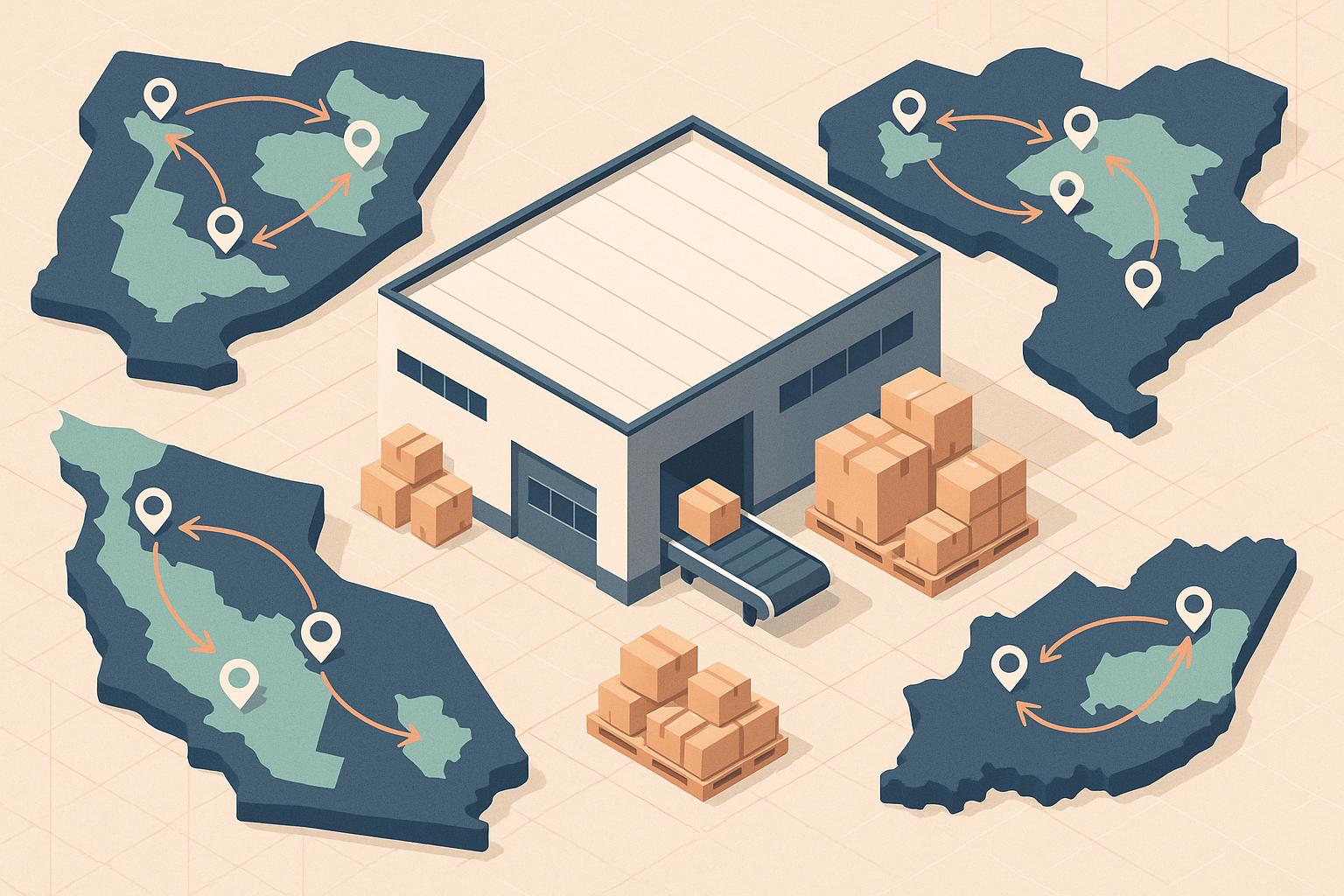
Fast shipping is another major focus. With two-day delivery now a standard expectation, 3PLs monitor not only warehouse shipping times but also whether orders reach customers within the promised delivery window. Multi-node distribution - storing inventory in multiple regions - can reduce shipping distances and costs while speeding up delivery, enabling brands to serve most U.S. customers within two days.
For post-purchase communication, 3PLs ensure seamless integration with a brand’s CRM or marketing platforms to provide shipment updates, tracking details, and inventory availability. They also monitor response times to customer inquiries, measuring how quickly customer service teams address status requests.
Some DTC brands even assign different weights to the core metrics based on their specific goals and customer expectations.
Gordon Belch, Co-Founder of vybey, shared how improved visibility into fulfillment performance made a difference for his team:
"Forthmatch gave us daily, granular visibility into fulfillment delays and real accountability with our 3PL partner. The before/after tracking saved us $600/month and gave us a clear action plan to improve operations."
3PL Operations That Improve Perfect Order Rate
Achieving a consistently high Perfect Order Rate requires more than just tracking metrics - it depends on solid operational practices. The gap between a 90% and a 99% perfect order rate often comes down to how well warehouse processes and systems are designed and executed. While metrics help identify problem areas, it’s the day-to-day workflows that ensure orders are shipped accurately, completely, and without damage. Leading 3PLs focus on refining these workflows to tackle key elements of the Perfect Order Rate: order accuracy, order completeness, damage prevention, and documentation.
Improving Order Accuracy and Completeness
Order accuracy begins with a well-integrated warehouse management system (WMS) that guides every step of the picking and packing process. When an order comes in, the WMS generates a detailed pick list, directing staff to the exact product locations. Barcode scanning ensures that the correct items are selected, catching errors before the order leaves the warehouse.
Top-performing 3PLs often achieve order accuracy rates above 99.9%, far exceeding the industry average of 96–98%. This level of precision isn’t just impressive - it’s cost-effective. A single picking error can cost around $42. For direct-to-consumer (DTC) brands, aiming for accuracy rates above 99.7% is a smart benchmark.
To further ensure accuracy, automated verification systems compare the number of scanned items against the order total. If there’s a mismatch, the system flags the order for manual review, preventing incomplete shipments from reaching customers.
Maintaining order completeness relies on accurate inventory management. Advanced tools like real-time tracking and RFID technology help 3PLs achieve inventory accuracy rates of 99.5% or higher - well above the typical 65–75% range. This reduces the likelihood of stockouts and backorders. AI-driven forecasting also plays a role, analyzing past orders and seasonal trends to help 3PLs maintain the right level of safety stock.
Robotic picking systems are another game-changer. These systems work alongside human staff, handling repetitive tasks and minimizing physical strain, which reduces errors. They also speed up fulfillment, enabling orders to be processed in under 24 hours. For example, a wellness supplement brand reduced late deliveries by 90% after partnering with a new 3PL. Within six months, they expanded from one to four fulfillment centers.
Reducing Product Damage During Fulfillment
Product damage can happen during warehouse handling or transit, but effective 3PLs take proactive steps to minimize these risks.
Comprehensive staff training and optimized packaging protocols are key. These include designated storage for fragile items and the use of tested carton sizes to prevent damage during busy periods. During peak seasons, experienced workers supervise temporary staff and conduct spot checks to maintain quality. Packaging materials are often adjusted based on operational realities, as what works in theory may not hold up during high-volume periods. Some teams even pre-assemble packaging inserts to streamline the process without compromising product protection.
Strong carrier partnerships also play a role in damage prevention. By analyzing shipping performance by carrier and region, 3PLs can identify patterns that lead to damaged goods. If a specific carrier consistently underperforms in certain areas, the 3PL may switch services or adjust packaging requirements. Monitoring return rates alongside fulfillment data helps catch potential issues early.
Efficient dock-to-stock processes protect product integrity as well. Leading 3PLs typically process and store incoming inventory within 24 hours - half the industry standard of 48 hours. Automated receiving systems and streamlined workflows ensure that products spend minimal time in vulnerable receiving areas.
While operational controls safeguard products, accurate documentation ensures compliance and smooth delivery.
Managing Documentation and Compliance
Even small documentation errors can disrupt the Perfect Order Rate. Incorrect shipping labels delay deliveries, billing disputes arise from inaccurate invoices, and missing customs paperwork can halt international shipments.
Automation reduces these risks by generating precise invoices, shipping labels, and customs documents. Systems automatically retrieve customer addresses, verify them against carrier databases, and print labels with accurate routing details. For international orders, customs documentation is included automatically.
Real-time tracking integration between the 3PL’s systems and the brand’s customer platforms ensures that shipping updates are accurate and timely. This seamless communication keeps customers informed and reduces the chances of errors.
For international shipments, customs compliance is critical. 3PLs handle all necessary paperwork - such as commercial invoices and certificates of origin - while keeping their systems updated with country-specific requirements. Quality control checkpoints ensure that shipments include the correct documentation and that shipping labels match the destination address, minimizing delays and customer service issues.
sbb-itb-eb0f906
Using Technology for Real-Time Perfect Order Rate Tracking
Tracking performance in real time can make all the difference. A 3PL achieving a 99% perfect order rate versus one stuck at 85% often boils down to visibility. When DTC brands have the ability to monitor fulfillment performance as it happens - not days or weeks later - they can tackle issues before they escalate. Real-time tracking turns the perfect order rate into more than just a number; it becomes a tool for action.
Analytics Dashboards and Reporting
3PL dashboards provide immediate insights into four key metrics: on-time delivery, order completeness, damage-free delivery, and accurate documentation. Having access to this information in real time allows brands to move beyond reactive strategies and adopt proactive management practices. Instead of waiting for monthly reports, these dashboards display metrics as they occur, helping brands quickly identify and address problem areas.
Dashboards equipped with drill-down features can pinpoint localized issues. For example, if on-time delivery rates drop in a specific region, the system can flag the problem instantly. Brands can then investigate whether the delay is due to carrier performance, inventory mismanagement, or even weather-related disruptions. Additionally, live KPI dashboards automate metric updates, eliminating the need for manual data collection. When inventory accuracy is expected to exceed 99.5% and order accuracy should surpass 99.7%, real-time tracking ensures any dip below these benchmarks is immediately noticeable.
Automated alerts further enhance proactive management. If a dashboard detects a breach in service level agreements - such as processing times exceeding 24 hours or on-time delivery rates falling below 99% - it can send instant notifications. This allows brands to address issues promptly, reducing the risk of customer dissatisfaction. Some dashboards even incorporate weighted scorecards, prioritizing metrics like on-time delivery, order completeness, damage prevention, and documentation accuracy based on a brand’s specific goals.
Order Management System Integrations
Real-time dashboards are only as effective as the data feeding into them, which is why seamless system integration is essential. When 3PL platforms integrate with a brand's order management system, data flows continuously, reducing errors and delays caused by manual entry. This ensures that inventory, picking, and shipment accuracy data are always up-to-date, eliminating data silos that can lead to outdated or incomplete information.
Integration is especially critical for maintaining documentation accuracy. Automated communication between systems ensures that shipping confirmations, tracking updates, and delivery notifications are generated directly from fulfillment data. For DTC brands using platforms like Shopify, these integrations allow historical orders, provider data, and fulfillment records to populate analytics dashboards instantly. This makes it easier to track performance trends over time.
Cross-system analytics also become possible with integration. For instance, by comparing return rates from order management systems with fulfillment data from the 3PL, brands can uncover patterns. One fashion startup used this approach to discover that their return rate was tied to specific carriers. Adjusting their shipping strategy based on this insight helped them improve their damage-free delivery rate to 99.7%.
Integrated, real-time visibility transforms how brands manage fulfillment. By catching issues early, they can shift from reacting to problems to preventing them altogether - a key factor that separates those with 90%+ perfect order rates from those struggling to meet industry standards.
How to Choose a 3PL That Delivers High Perfect Order Rates
Selecting the right third-party logistics (3PL) partner can significantly improve your perfect order rate, pushing it above 90%. Achieving this requires careful evaluation of a 3PL's historical performance, technological capabilities, and operational scalability. The goal is to ensure they consistently deliver orders that are on time, complete, damage-free, and properly documented.
Evaluating 3PL Performance and Capabilities
Start by requesting 12–24 months of performance data from potential partners. A reliable 3PL should provide clear metrics on the four key components of the perfect order rate: order accuracy, on-time delivery, product condition, and documentation accuracy. For reference, industry standards for order accuracy range from 96% to 98%, but the best providers exceed 99.9%. Similarly, aim for partners with on-time shipping rates above 99%.
Inventory accuracy is another critical factor. Leading 3PLs maintain accuracy rates above 99.5%, surpassing the industry benchmark of 97%. Ask about their dock-to-stock time - top-tier operations complete this process in under 24 hours, while standard providers may take up to 48 hours. Keep in mind, even if all four components operate at 95%, the overall perfect order rate can drop to around 81.5%.
Geographic coverage is equally important. Look for 3PLs with multiple fulfillment centers across different regions. For example, a brand with inventory in California and the Midwest can reach most U.S. customers within two days, while also cutting down on last-mile delivery costs. A multi-node distribution network also offers redundancy, ensuring orders can be rerouted in case of disruptions.
Technology plays a huge role in maintaining high standards. Choose providers that use integrated warehouse systems with barcode scanning and automated picking to minimize errors. Real-time inventory tracking, such as RFID systems with accuracy rates above 99%, is essential. Ensure their systems integrate seamlessly with your ecommerce platform to prevent overselling and ensure accurate documentation.
Quality control processes are another area to investigate. Ask about automated order verification systems to reduce mispicks, regular cycle counts instead of relying solely on annual audits, and employee training programs. For damage prevention, inquire about packaging strategies, void fill optimization, and handling procedures.
Consider the provider’s ability to handle peak order volumes without compromising accuracy. Ask about their pick-line optimization and quality control measures during busy periods. Also, evaluate their flexibility in reallocating warehouse space as your product mix changes, and request examples of how they’ve successfully scaled operations for other clients.
When negotiating service level agreements (SLAs), use industry benchmarks as a starting point and tailor them to your needs. If your brand operates in a premium segment where customers expect near-perfect fulfillment, create a scorecard with four to six key performance indicators (KPIs) weighted by your priorities. Ensure the 3PL commits to measurable targets and provides transparent performance reporting.
Using Forthmatch to Compare 3PL Providers

After identifying your key performance metrics, platforms like Forthmatch can simplify the process of selecting a 3PL. Forthmatch offers direct access to vetted 3PL providers without brokers, hidden fees, or complex quote forms. The platform allows you to filter providers based on delivery reach, platform compatibility, pricing, and feedback from other merchants - all factors that can directly impact your perfect order rate.
Forthmatch’s real-time service area maps show where each 3PL operates fulfillment centers, helping you find providers that align with your delivery goals. You can also narrow your options using filters for integration compatibility, order volume capacity, specialized handling needs, or industry experience.
The platform doesn’t stop at selection. It includes tools for ongoing performance management. For instance, the SLA Analytics Hub ($9/month) sends alerts when performance dips below agreed thresholds, tracks SLA history, and identifies root causes of issues. This ensures your perfect order metrics remain actionable and visible.
For brands comparing multiple providers, the Request Quotes feature ($50 per session) allows you to send identical RFPs to several 3PLs. Responses are displayed in a centralized dashboard, making it easier to evaluate pricing and fulfillment options without the hassle of contacting each provider individually.
The 3PL Accountability Session, also priced at $50 per session, is another valuable tool. It facilitates structured performance reviews with your chosen provider, helping you set baseline metrics, plan improvements, and track progress over time. This approach can turn a struggling partnership into one that consistently meets high performance standards.
Finally, real-time fulfillment tracking provides visibility across all fulfillment centers, including inbound, in-process, and shipped orders. You can monitor on-time delivery rates, processing speeds, delay patterns, and SLA violations, all benchmarked against your goals. For Shopify users, the platform automatically imports historical orders, provider data, and fulfillment records, streamlining performance analysis without manual entry.
Conclusion
Reaching a perfect order rate of 90% or higher hinges on two key factors: timely delivery and an impeccable customer experience. The right 3PL partner can make this achievable by integrating advanced technology, reliable processes, and clear performance tracking across four essential areas: on-time delivery, order accuracy, damage-free shipping, and precise documentation.
The financial benefits of working with a top-performing 3PL are hard to ignore. With an average picking error costing $42 per mistake, even small improvements in accuracy can lead to significant savings when scaled across thousands of orders. Many DTC brands have already seen measurable gains after transitioning to higher-performing logistics partners.
Choosing the best 3PL requires more than just reviewing marketing materials - it demands access to real performance metrics and clear pricing. Platforms like Forthmatch simplify this process by connecting businesses to vetted 3PL providers. With tools such as real-time service area maps, merchant reviews, and customizable filters, brands can identify partners equipped with features like multi-node distribution networks and integrated warehouse systems that directly contribute to higher perfect order rates.
Sustaining this level of excellence also requires constant monitoring and accountability. Tools like the SLA Analytics Hub offer automated alerts when performance falls short, enabling proactive issue resolution before customers are affected.
FAQs
How do 3PLs help DTC brands achieve high perfect order rates?
Third-party logistics (3PL) providers are essential for direct-to-consumer (DTC) brands aiming to achieve high perfect order rates. They rely on advanced tools like automated inventory systems, real-time order tracking, and predictive analytics to ensure deliveries are accurate and on time.
By connecting directly with eCommerce platforms, 3PLs help reduce order processing errors and improve customer communication. This seamless integration ensures orders are picked, packed, and shipped correctly from the start, cutting down on delays and boosting customer satisfaction.
What key metrics do 3PLs monitor to maintain a high perfect order rate, and how do they resolve issues when performance drops?
Third-party logistics (3PL) providers keep a sharp eye on a few key metrics to maintain a high perfect order rate for direct-to-consumer (DTC) brands. These metrics include on-time delivery rates, order accuracy, inventory accuracy, and damage-free shipments. By monitoring these closely, 3PLs can pinpoint bottlenecks or errors that might disrupt the fulfillment process.
If performance starts to slip, 3PLs don’t wait around - they act. This could mean tightening quality control, fine-tuning warehouse workflows, or even reevaluating carrier partnerships to speed up deliveries. With the help of regular reporting and real-time analytics, they can quickly spot and resolve issues, ensuring a smooth and reliable experience for DTC brands and their customers.
What’s the best way for a DTC brand to choose a 3PL partner that boosts perfect order rates and customer satisfaction?
To find the right 3PL partner, direct-to-consumer (DTC) brands can turn to tools like Forthmatch for guidance. This platform allows brands to compare providers based on factors like delivery coverage, pricing, and platform compatibility, ensuring the partnership meets their specific needs. Plus, Forthmatch includes feedback from actual merchants and provides clear service details, making it easier to choose a logistics provider that delivers on time, accurately, and helps boost customer satisfaction.